Two fjords, one 4am alarm, and the most beautiful water we’ve ever sailed
There are days at sea that you know, even as they happen, that you will spend the rest of your life trying to describe accurately, but failing. July 14th, 2025 — the day we motored up Tracy Arm fjord in the Alaska panhandle — is one of those days.
Tracy Arm runs 45 kilometres from Frederick Sound deep into the Coast Mountains, ending at the twin Sawyer Glaciers — tidewater glaciers that calve directly into the fjord. The navigation is straightforward in benign conditions: you follow the channel, avoid the icebergs, and try not to be so overwhelmed by the scenery that you forget to watch where you’re going.
What a Day
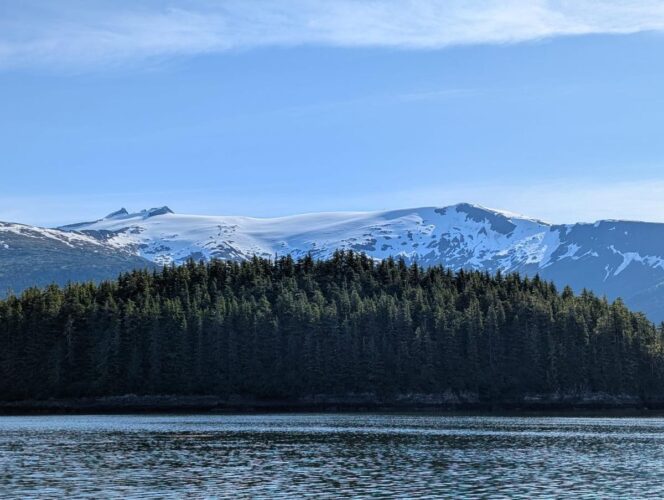
Tracy Arm — icebergs, waterfalls, sunshine. “What a day.”
The conditions on the 14th were as good as Southeast Alaska ever offers. Blue sky. No wind. The water was a deep, impossible blue, broken only by the white of calving bergs and the grey-green of the canyon walls rising on either side. Waterfalls — hundreds of them, fed by snowmelt — streaked every vertical surface. We dodged growlers with the boat hook and motored deeper into the fjord.
At the end of the fjord, the Sawyer Glacier calving face. We put the engine in neutral and drifted, watching and listening. The glacier works on its own schedule — a deep groan, a pause, a crack like rifle fire, and then a section of ice the size of a house calves into the water and bobs there, rotating slowly. You feel the wave it makes several minutes later.
We covered just over 50 nautical miles that day. We could have turned around much sooner. We didn’t want to.
Ford’s Terror — The 4am Start
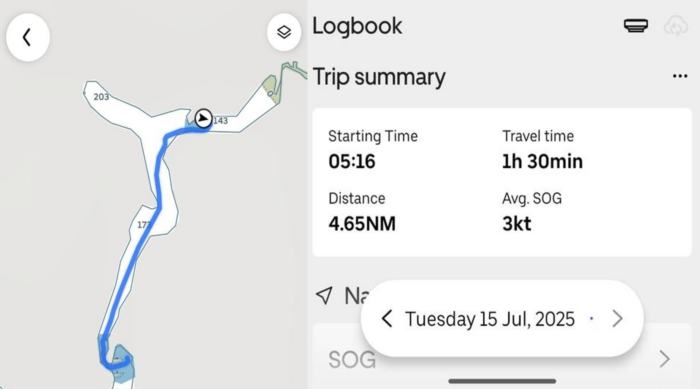
Ford’s Terror — entered at 5:15am on the high water slack
Ford’s Terror is a name that needs no embellishment. It refers to a tidal fjord accessible through a narrow slot of a channel that runs at up to 10 knots at peak tidal flow. The entrance is passable only at high water slack — a window of perhaps 20 to 30 minutes when the current dies to nothing and you can transit safely. Miss the window and you either don’t get in, or — if you’ve already entered — you can’t get out.
The alarm went off at 4am. We motored quietly to the entrance in the grey pre-dawn light, watching the kelp to read the current. At 5:15am, the current died. We went in.
Inside
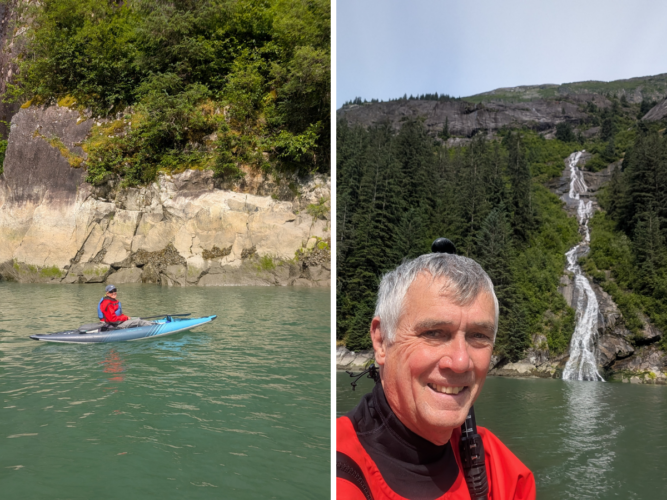
Inside Ford’s Terror — paddling the east arm in drysuits. Water temperature: 5°C
Inside Ford’s Terror is a world completely apart. Sheer granite walls rise hundreds of metres on every side. The water — glacially cold, perfectly clear — mirrors the sky. Waterfalls thread down every surface. There were no other boats. There was no noise except the sound of water and, occasionally, the distant thunder of calving ice.
We spent the night at anchor and the next morning paddled the east arm in drysuits. The water was 5 degrees Celsius. Even in the drysuits, you were aware of the cold in a peripheral, respectful way — the way you’re aware of a large animal nearby. We paddled for three hours and saw not another soul.
Ford’s Terror earns its name during the tidal exchange. In the calm between tides, it is one of the most peaceful places on earth. We left on the following day’s high water slack, transiting back out into the sunlit world of Frederick Sound feeling like we’d been somewhere genuinely remote and genuinely wild.
We had.