Vancouver Fleet recently held a panel discussion with doers and doners and asked for their top five recommendations for preparing to go offshore. There was a lot of back and forth, and a huge amount of useful information was shared. Overall, recommendations for specific gear lagged far behind discussions of the mental preparation required, and discussion about the relatively mundane tasks that consume most of your time on passage (e.g., eating, sleeping, watchkeeping).
Offshore cruising isn’t just about the boat, the gear, or the route — experienced cruisers often say it’s the intangibles that make the real difference for long-term success and enjoyment. The hardware gets you moving, but resilience, adaptability, and good decision making keep you out there happily. Here are five key human factors, illustrated with real stories shared by BCA members in past issues of Currents.
1. A Resilient, Positive Attitude
Embrace (okay, tolerate with appropriate stoicism) periods of discomfort, uncertainty, and setbacks: rough weather, breakdowns, isolation. Manage fear realistically; know when to push on and when to heave-to. Patience is huge. Passages and anchorages can be boring, frustrating, or exhilarating, and sometimes all three in turn. Cultivate gratitude. Many cruisers say a good attitude turns potential misery into adventure. It also makes for great stories to share at potlucks.
Ann Lange shared her advice in her February 2022 Currents article, “Lessons Learned: How Cruising Changed My Life”, February 2022 [1]. During a major blow far from land on their Fast Passage 40, Ann and her partner prepared meticulously and endured without whining or excessive worry. She reflects: “We learned that worry cripples decisions… [we] endured without worry.” This mindset of acceptance and gratitude carried them through, building resilience that turned potential misery into calm endurance. Another lesson came from a 20-day windless passage with limited fuel. Patience was essential: no rushing, just adapting to the uncontrollable.
Similarly, Roger Friesen shared that on an Atlantic crossing he confronted mortality mid-ocean: “There was a point at which I was literally beyond help… I had to accept the fact that something beyond our control might happen and that a series of events could possibly lead to my death. And I had to be okay with that.” This acceptance brought lasting peace and clearer thinking in adversity. (“Psychological and Emotional Preparation for Offshore Sailing,” June 2015 [2]).
2. Adaptability & Self-Reliance
Be ready to improvise fixes, change plans (weather, gear failure, crew dynamics), and live simply. Offshore sailing demands resourcefulness, with no marina, chandlers, or certified technicians nearby. Humility to learn from mistakes and ask advice (from locals or other cruisers) is key. Often, the best chandlery is a local ferretería (hardware store). I once made a masthead base for a Windex out of JB Weld steel epoxy, a Coke bottle for a mold, and crayons for mold release.
In 2015, Norm Cooper described how in the Gulf Islands, a pre-departure check revealed a broken engine dip stick tube, caused by vibration fatigue. They improvised a temporary fix with “a pencil wrapped with rigging tape as a plug,” which held for a week until a replacement arrived — fresh eyes and resourcefulness in crisis. (“Lessons Learned the Hard Way – Thorough Boat inspections”, November 2015 [3]).
Henk and Lisa Benckhuysen had a gennaker furling fail one night off Baja. They shadowed it behind the main and took it down by hand. They also rebuilt toilets (twice!) and cleared filters using onboard spares — relying on deep boat knowledge from pre-departure overhauls. (“Harlequin Cruises the Sea of Cortez”, December 2017 [4]).
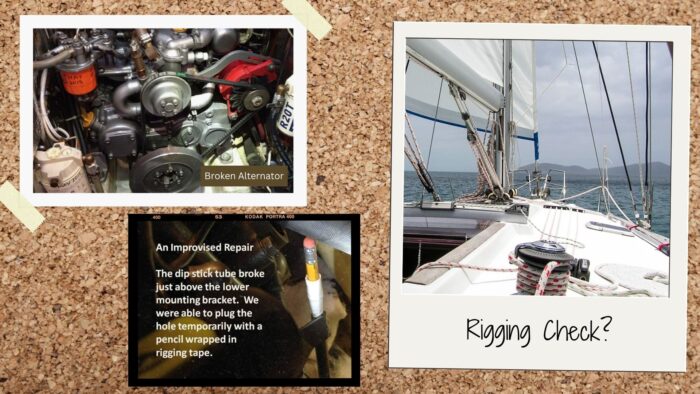
All kinds of things can break while offshore. Will you be able to make the repairs
3. Strong Decision Making Under Pressure
Quick, calm judgment amid fatigue, bad weather, or emergencies is important. Practice scenario planning: “What if the autopilot fails?” or “Heavy squall incoming”. Mental rehearsals build confidence. Preparation opens options without obstacles to execution.
Norm Cooper detailed an event in another Currents piece: during a stormy 325 NM passage from Niue to Tonga, the alternator failed to charge the 800 Ah battery bank. They adapted by first shutting down refrigeration and other non-essentials to conserve power, then had the time to troubleshoot a corroded spade connector and crimp a new one on to restore the system. (“Lessons Learned the Hard Way – Electrical Failure”, August 2016 [5]).
4. Goal Setting & Realistic Planning
Break the dream into steps; use weather windows carefully. Set flexible milestones (e.g., “Depart Juan de Fuca by X date”) with big buffers. Track progress for motivation but adjust since rigid goals cause burnout or risk. Cruisers’ plans are truly “written in the sand at low tide.”
Ann Lange had a 20-day windless passage which tested their patience: rigid expectations would have led to frustration, but embracing the delays built motivation through small milestones like aligning days with sunrises. Bureaucratic delays in foreign ports further reinforced flexibility: it took hours or days for customs, but adjusting to the delays kept things enjoyable. (“Lessons Learned: How Cruising Changed My Life”, February 2022 [1]).
This echoes other sailors’ weather delays in Neah Bay, Mexico, or the Canaries, or even full passage reroutes — adherence to overly rigid plans can lead to bad decisions.
5. Teamwork & Communication Amongst Crew
Have clear roles, honest talks about fears and expectations, and quick conflict resolution. Even solo, make daily self-checks on energy, morale, and risk. Manage watches and nutrition to avoid exhaustion: you don’t make good decisions when tired, dehydrated, or ‘hangry’. Stay connected to other cruisers and home.
Stefa Katamay described how intense boat prep in a remote Mexican marina put a strain on the couple’s relationship. As the only liveaboards in the marina, they really felt the lack of community. Their solution was to take a break back home in Victoria to rebuild individually and socially, joining groups for “synthetic extended family.” Stefa stresses the need for honest discussions to avoid resentment from loneliness, quoting Vonnegut on gender differences in social needs. (“Caution – Rough Emotional Seas Ahead!”, November 2018 [6]).
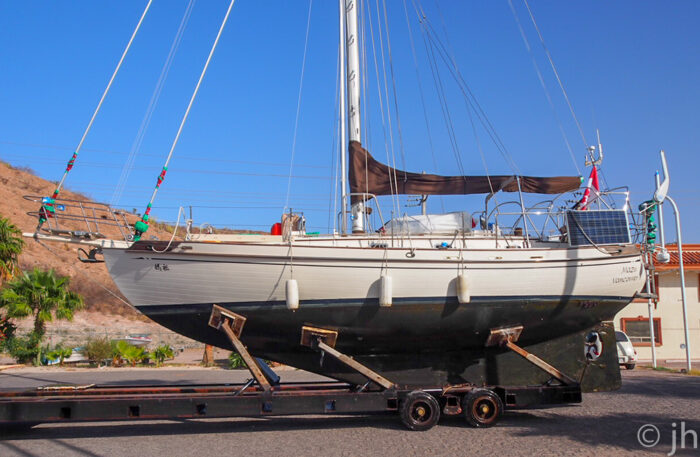
Stefa’s boat, Mazu, on the hard in Mexico.
These intangibles aren’t abstract: they have been proven in high-stakes situations shared by BCA cruisers. As members, sharing stories helps us all prepare better. What’s your biggest mindset lesson from time on the water?