

A friendly heads-up for boaters who bring their furry crew members along for the ride:
Dog waste might seem like a small issue in a big ocean, but in busy anchorages it can quickly add up. When it’s left on beaches, tides and rain can wash it into the water, bringing bacteria like E. coli and excess nutrients along with it. Research has shown that dog feces can be a meaningful source of microbial contamination at recreational beaches, contributing to elevated levels of fecal indicator bacteria such as enterococci and E. coli. In sheltered bays with limited water movement these effects can linger, impacting water quality, shellfish safety, and everyone’s enjoyment of the shoreline.
There is no single province-wide “dog poop on beaches” law. In BC, enforcement is split between Parks Canada (for national parks), BC Parks (for provincial parks), and individual municipalities (for local beaches and docks). But across all of them, the expectation is the same: pick it up and bin it properly. In national park waters like the Gulf Islands, it is an enforceable regulation with actual fines. Elsewhere, it may be a municipal bylaw or park rule, but the obligation is real either way. Worth noting: Boating BC and the Georgia Strait Alliance’s Clean Marine BC program emphasize responsible waste disposal as part of green boating practice — so there’s also an industry/community standard that aligns with the regulations.
If you boat with a dog, the most important step is simple: always pick up after your dog, even in remote spots where it might not seem necessary. Dog waste can carry harmful bacteria, parasites, and nutrients that stick around in the environment and get washed into the water with rain or tides. Bringing biodegradable bags and storing waste securely on board until you can dispose of it properly on shore makes a real difference. If there aren’t disposal options nearby, the best choice is to keep it on your boat until there are.
A bit of planning goes a long way, too. Before heading ashore, you might look for places where your dog can go that are away from the high-tide line, streams, or popular beach areas. Studies suggest that when dogs frequently use the same shoreline spots, the risk of water contamination increases. Some boaters even train their dogs to use a designated spot on deck or an onboard potty system, which can greatly reduce impacts on shorelines.
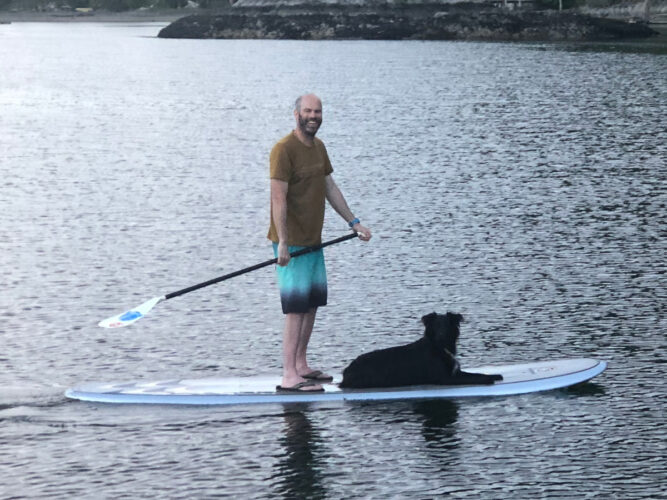
Ian and Stanley head to the beach at Port Graves, Gambier Island.
It also helps to stay aware of local guidelines. Many coastal areas and marine parks ask pet owners to manage waste carefully to protect sensitive ecosystems and public health. Scientists use bacteria like E. coli as indicators of contamination in recreational waters, helping signal when there may be health risks present. By following good practices, you help protect these environments and keep anchorages welcoming for everyone.
Ultimately, minimizing dog waste pollution is about respecting the shared nature of anchorages. With a bit of preparation and consistency, boaters can ensure that their time on the water leaves no trace — keeping beaches clean, waters safe, and anchorages enjoyable for everyone.
Some dog poop references:
Responsible Recreation | BC Parks
Marine Visitor Guide | BC Parks
Green Boating | Boating BC Association
Environmental Literacy Council. What are the dangers of dog poop?
Environmental Literacy Council. Is dog feces a health hazard?
Boating – Gulf Islands National Park Reserve (see “Leave No Trace” section)
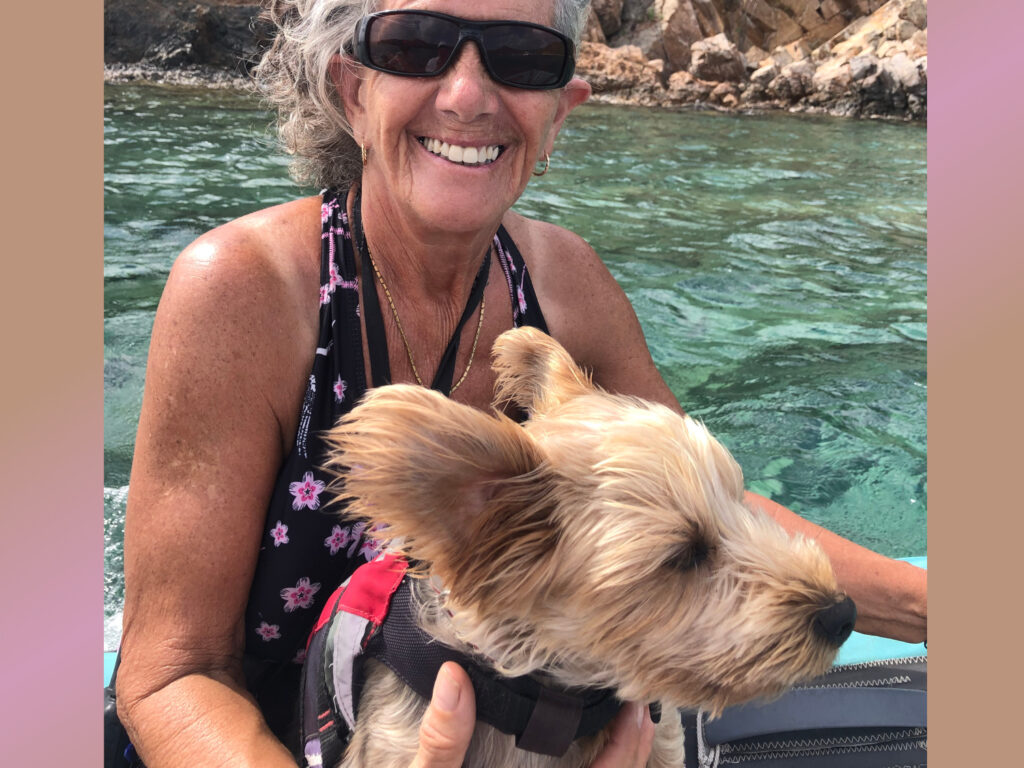
*Featured photo: Diny and Skipper head out for a shore leave on Norman Island, BVI. Skipper has a potty station on the boat, and his people are always prepared to pick up after him on shore.


 Currents PDFs

I don’t have a dog in this fight.
I don’t even have a dog.
Just the same, I questioned the assumptions underlying this article and submitted it to my AI sidekick for a deepr dive and comment.
Here is the conversation and please read right to the end. Dog lovers are vindicated. Cats? Not so much.
https://poe.com/invite/31d901de8c2d442d8f0b2d45f32213b9