

Before you picture yourselves in a hazmat suit dodging mutant zombies, relax: this article isn’t about missiles or meltdowns. It’s about the real enemies that can hitch a ride on every provisioning run, banana bunch, or cardboard box: the six-legged (or four-legged) freeloaders who think your boat is an all-you-can-eat floating resort with an outstanding buffet.
Cruising in the tropics, you deal with many things not found at home, such as crocodiles, snakes, monkeys, and others. But there are a few more common infestations that you can be prepared for.
The means to deal with these issues are available in pretty much any hardware or grocery store outside of California, but you don’t want to spend your time looking for them when you need them most (perhaps leaving the admiral or crew aboard alone with the unwelcome guests while you’re out shopping for the cure). If you’re in an idyllic anchorage away from any source of supply, sailing for hours to pick up what you need is a real buzz kill. And if you are two days into a two-week passage, you are stuck with your newly discovered unwanted crew. You will look so prepared when you reach into your stores and pull out just the right thing to deal with these semi-predictable infestations.
No matter how careful you are, creatures can find their way aboard. Last season I found a cockroach on our foredeck while we were anchored in the San Blas islands. It had apparently flown over from another boat or one of the islands to land on our deck. We were two days’ sail from the nearest hardware store.
Here are the usual suspects and how to send them to Davy Jones without turning your boat into a toxic waste site.
Rats – The Furry Pirates
Nothing ruins a quiet night at anchor like the pitter-patter of little rat feet doing the conga through your lockers. Rats swim better than most crew and can squeeze through a hole the size of a quarter. They are common at docks and in marinas worldwide.
Battle Plan
Carry a couple of classic snap traps (the old-school ‘Victor’ ones still work best). Wipe the trigger mechanisms with Vaseline to keep them snappy before stowing them in a Ziploc bag with your other treasures.
Bait the traps with peanut butter and place them along walls and under the galley sink as soon as you suspect you have unwelcome guests. A bored rat starts chewing wires and hoses and dreaming of your well provisioned boat as their forever home. Ensure those dreams remain unfulfilled.
Rats hate mothballs. A package of mothballs can be broken out and distributed in the bilge and lockers to discourage their presence. Overdoing it will discourage your presence too, so don’t use too many.
Don’t use poison. It works, but rats rarely die in places where it’s convenient to retrieve their remains for disposal.
Cockroaches – The Immortal Invaders
One pregnant female in a grocery bag and a month later you have a roach flash mob in the bilge.
Battle Plan
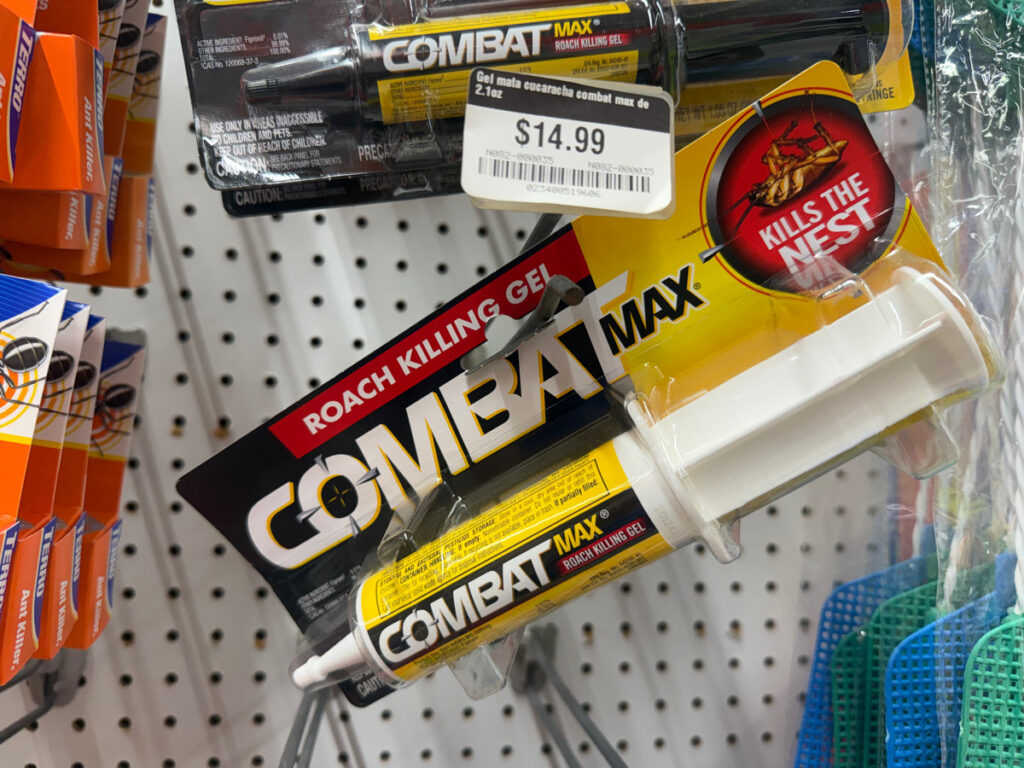
Gel baits (Advion, Alpine, Combat, or Maxforce) are pure magic. A pea-sized dot in each cabinet corner is enough. Roaches eat it, share it with their 500 closest friends, and the colony collapses faster than a drunk sailor on liberty.
Keep a spare tube in a sealed Ziploc – they last for years.
We put this out when storing the boat in the off season to ensure they can’t take up residence in our absence. Bonus: the gel works in humid, rocking conditions where foggers and sprays just make everything smell like damp regret.
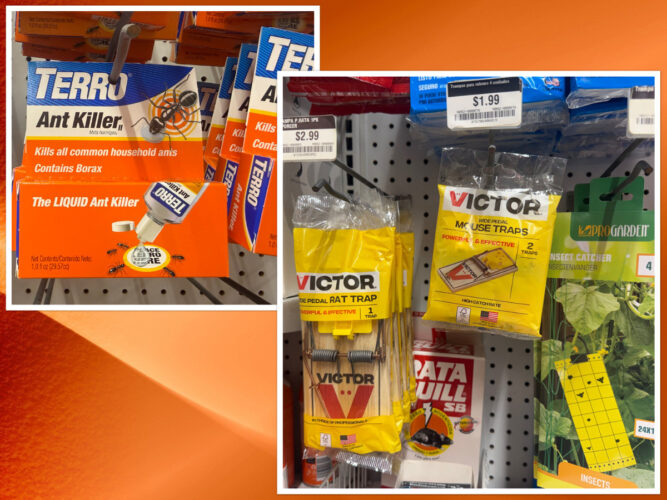
Ant killer and rodent traps.
Ants – The Tiny But Relentless Horde
One scout ant finds a crumb of yesterday’s Oreo and suddenly your countertop looks like the Highway 401 of the insect world.
Battle Plan
Terro liquid ant bait is the gold standard. Ants drink the sweet poison, march home like drunken midshipmen, and wipe out the entire nest.
Carry a six-pack of the little plastic stations or a bottle of bait; they’re cheap, non-spill, and you can tape them upside-down under shelves if needed.
There are home made baits and poisons that can help, but the proven commercial products aren’t that expensive, really do work, and are properly packaged to store aboard for later use. Toss the ‘cures’ for all three pests in a Ziploc and stow them for the day you need to pull them out and engage your vessel in chemical and biological warfare against unwelcome boarders. You may never need them, but if you do you will be happy to have them at hand.
Fair winds and pest free voyages,
Your slightly paranoid but perpetually pest and bug-free correspondent on Avant.


 Currents PDFs


Very good advice with a sense of humour.
Good stuff. We found that shopping trips were frequently a source of roaches. We never allowed cardboard boxes we might bring back to the boat to go any further than the cockpit. Once emptied in the cockpit we tossed them into the dinghy. Then we would take them ashore to be disposed of at the marina or town waste disposal. Any escapees were dealt with by an anti roach concoction: condensed milk mixed with Boric Acid to form little balls. Heather would place them in strategic locations down below. We managed to maintain a roach free vessel and on one occasion helped to de-roach another cruising boat that had visible creepy crawlies.
We have used the classic ‘cockroach cookie’ mix (1/3 powdered milk, 1/3 sugar, 1/3 boric acid – mix with water to make a paste, drop on waxed paper to dry as ‘cookies’) in the past and it definitely works. Some studies say the commercial versions work faster (1-3 days vs 1 week plus). Pre-making and storing a supply of diy cookies is a clear alternative to commercial baits, if a bit more effort.